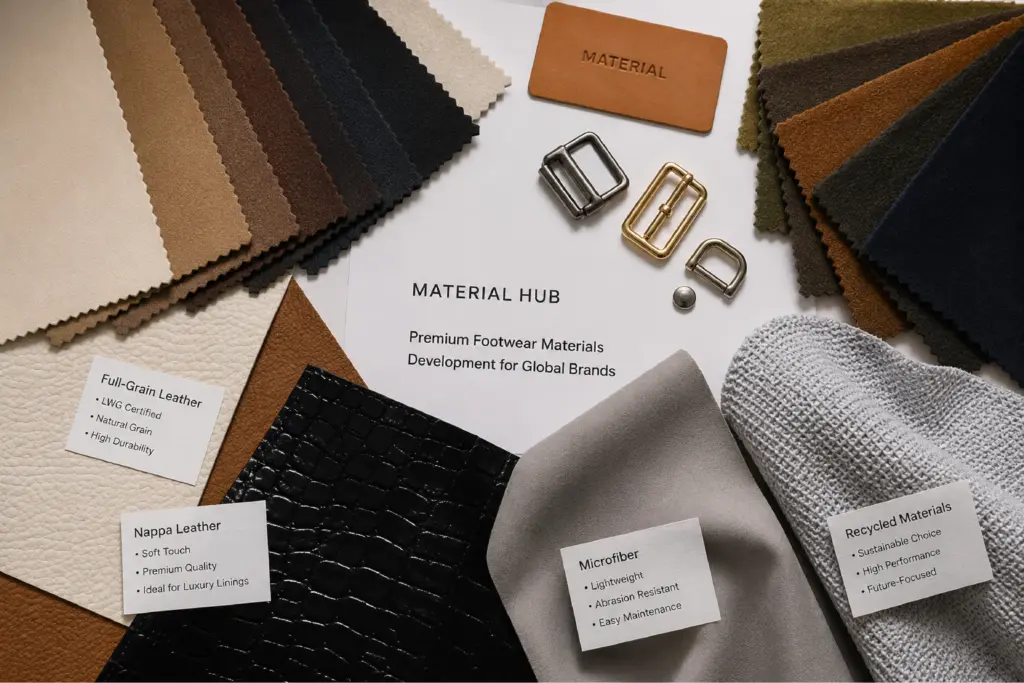
Strategic Guide to Footwear Material Sourcing and Development

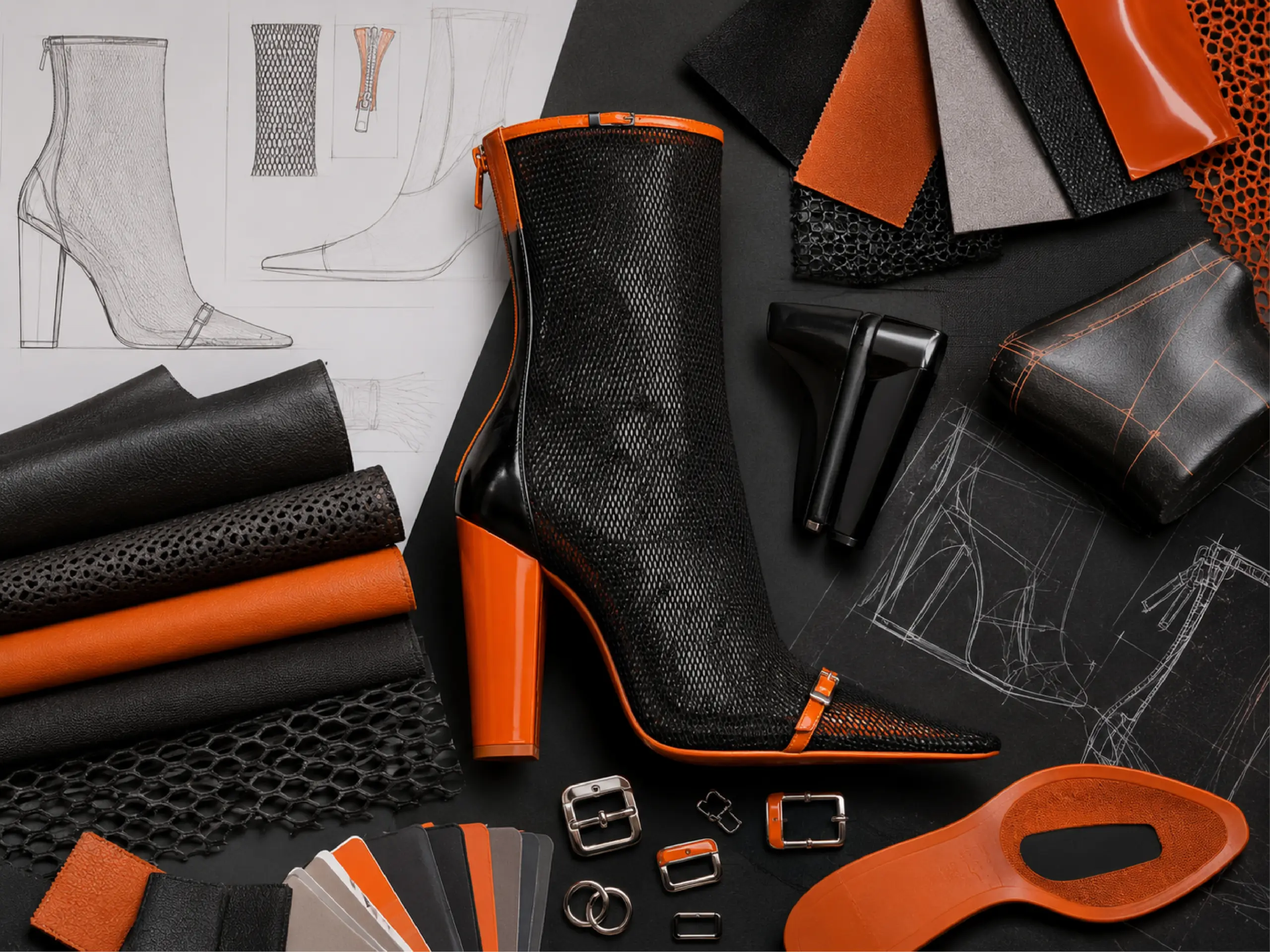
Why Material Sourcing Matters for Private Label Footwear Brands
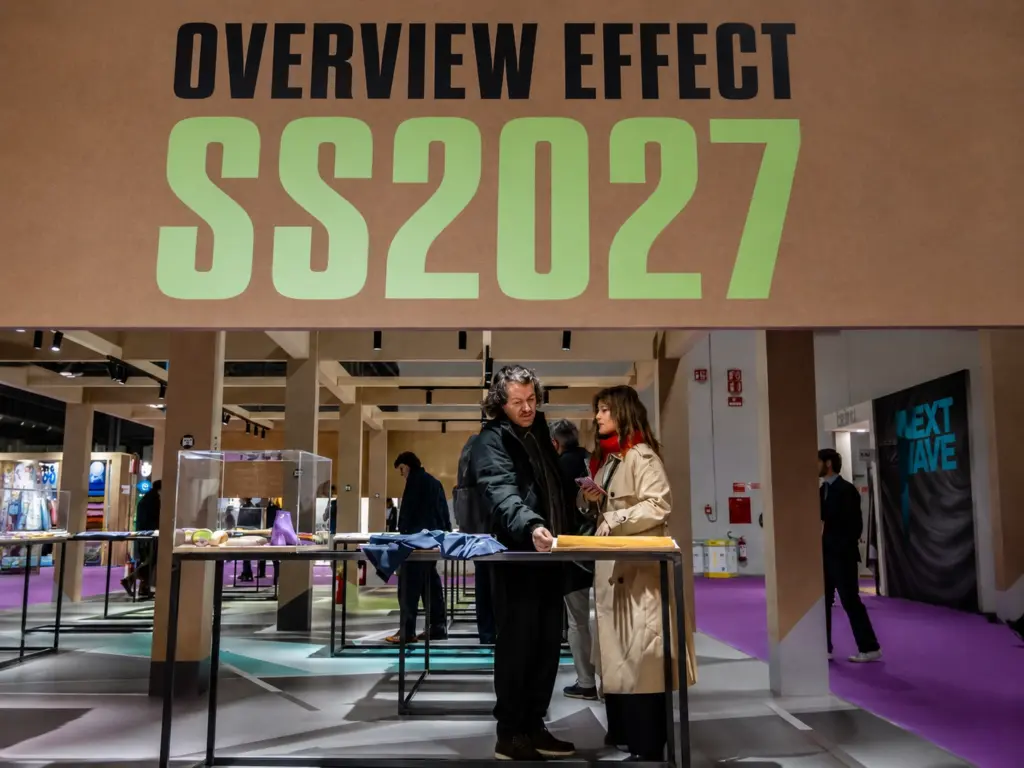
In the contemporary fashion landscape, the “material-first” philosophy is no longer a luxury—it is a strategic imperative. As highlighted in the McKinsey State of Fashion 2026 report, supply chain resilience and material integrity are now the primary drivers of brand equity. For founders and product managers, the journey from a sketch to a retail-ready collection begins not with the silhouette, but with the substrate.
Choosing the right footwear material supplier is the foundational step in architecting a brand that survives the rigors of the global market. Whether you are a boutique label in Milan or a rising digital-first brand in Dubai, understanding the nexus between material science and footwear development is what separates conceptual designs from commercially successful products.
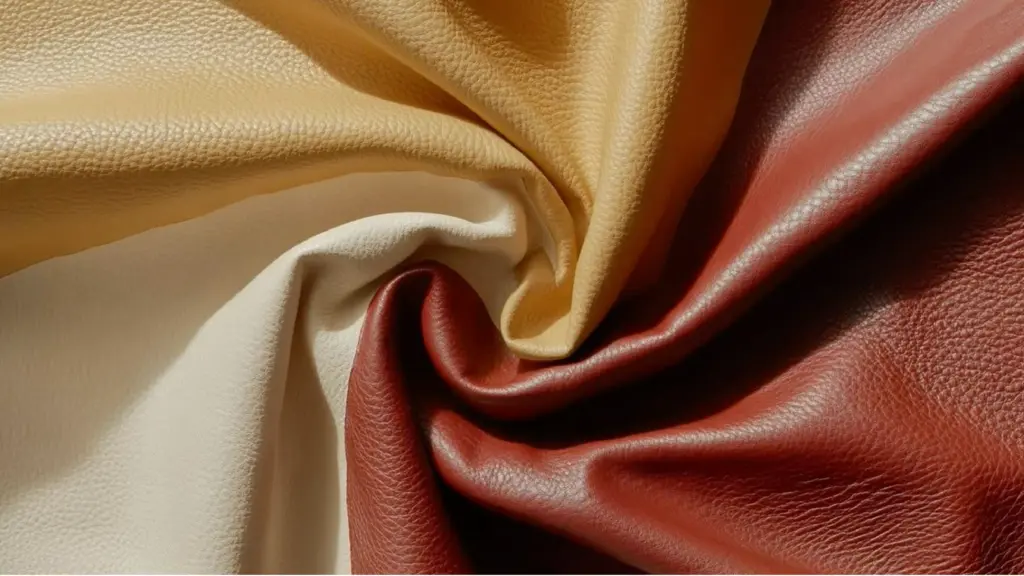
Curating Premium Shoe Materials: Beyond Aesthetics
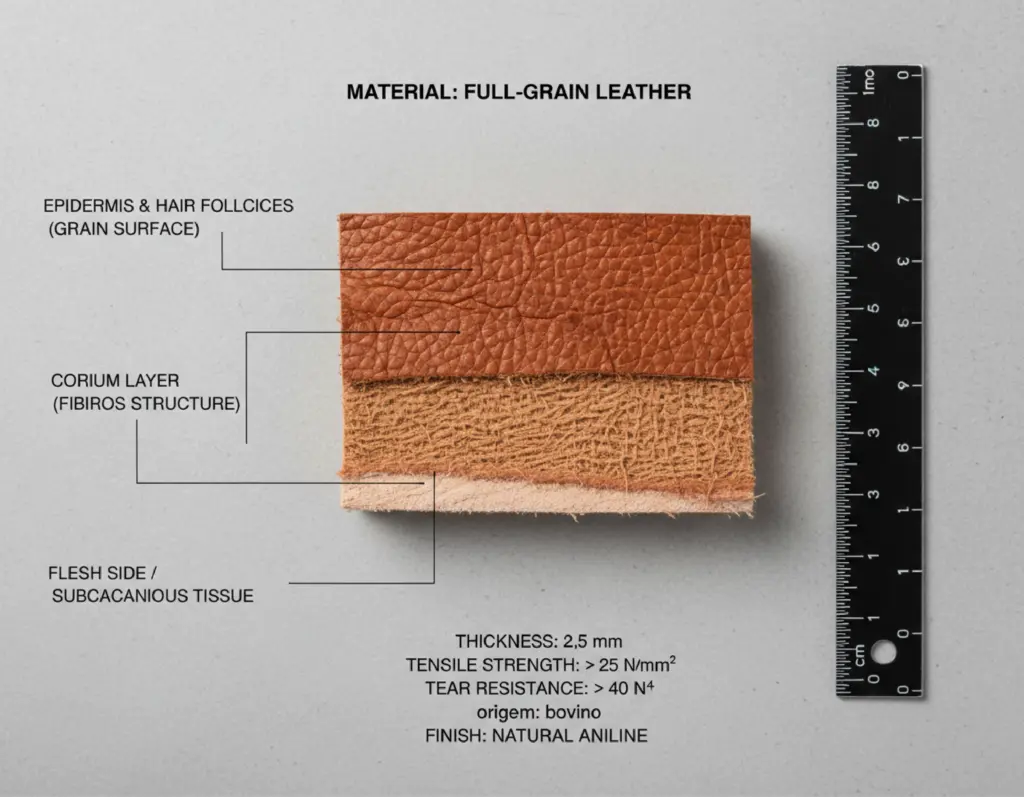
Full-grain leather is of the highest quality
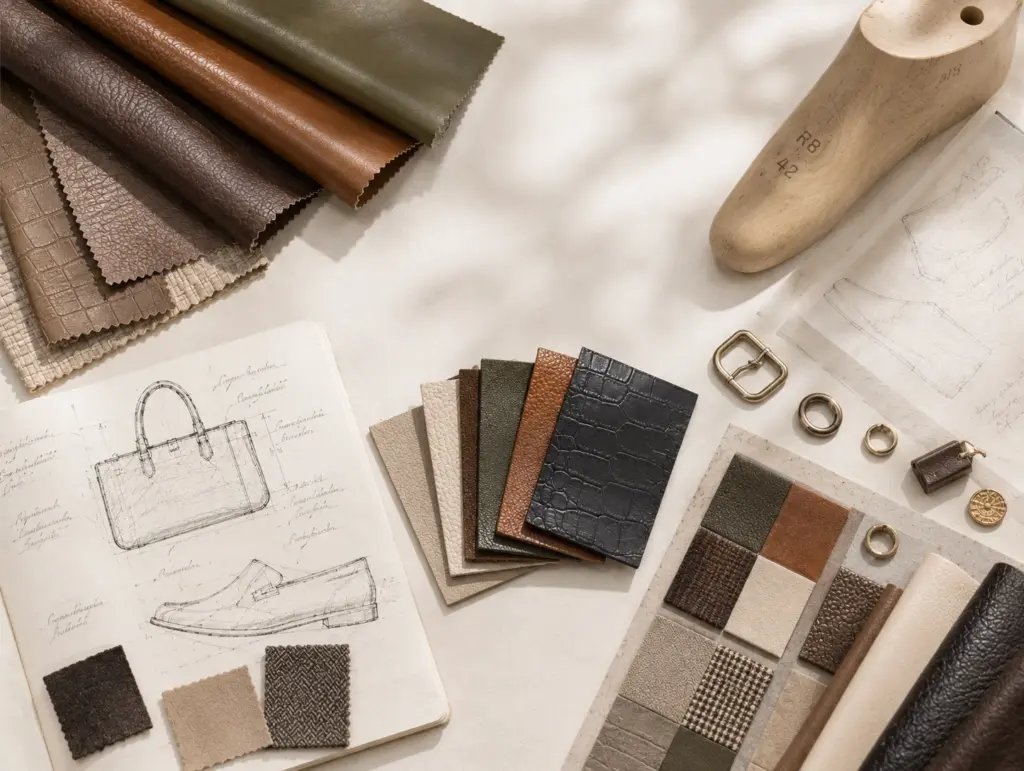
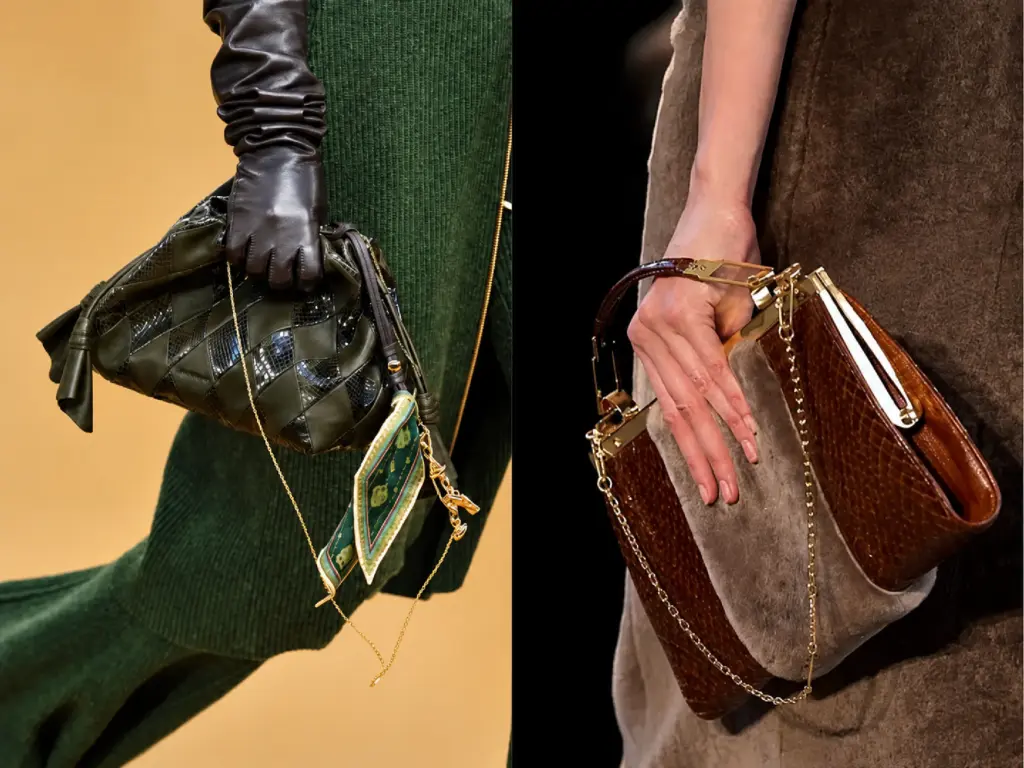
For high-end collections, premium shoe materials define the price ceiling. Full-grain leather, the pinnacle of bovine hides, retains the natural grain and breathability essential for longevity. In our development hub, we emphasize the use of Nappa leather for its buttery texture, often used by the most prestigious women’s heels manufacturer partners to ensure zero-break-in comfort.
Sustainability and Recycled Materials
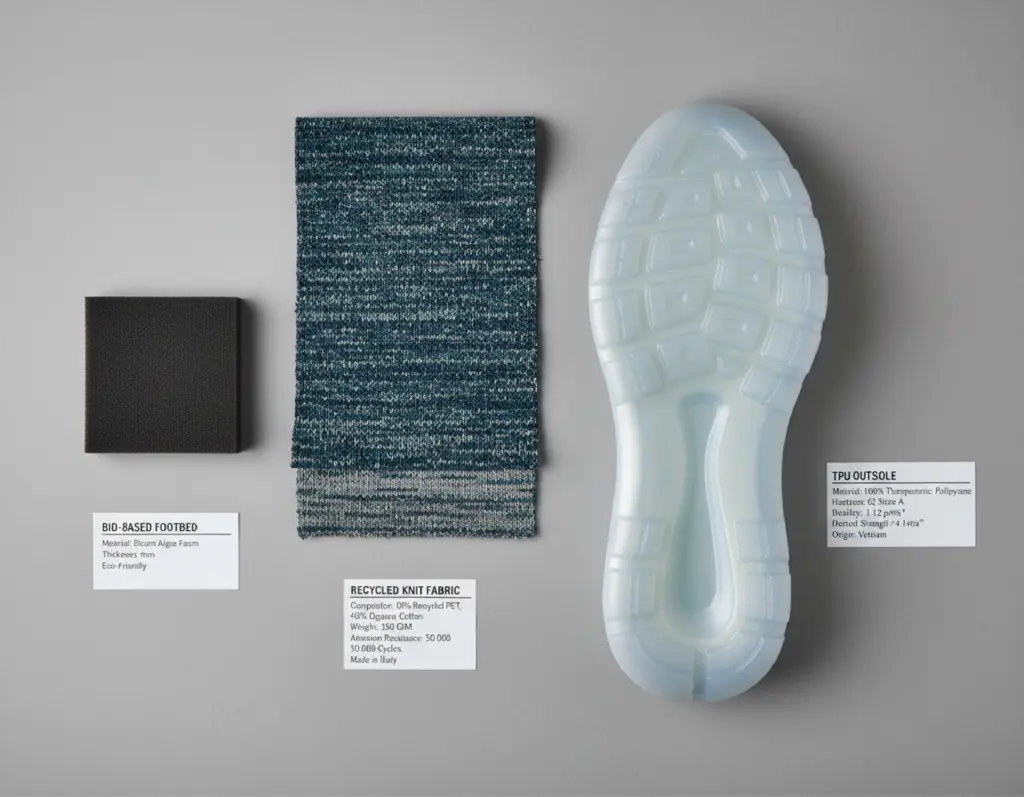
As the industry pivots towards a circular economy, Emerging Brands Source Footwear Materials that align with ESG goals. This includes GRS-certified recycled polyesters and bio-based vegan leathers. However, sustainability must not compromise performance. We integrate recycled materials that meet the same tensile strength standards as virgin synthetics, ensuring that “eco-friendly” also means “durable.”
Echnical internals: lining and outsoles
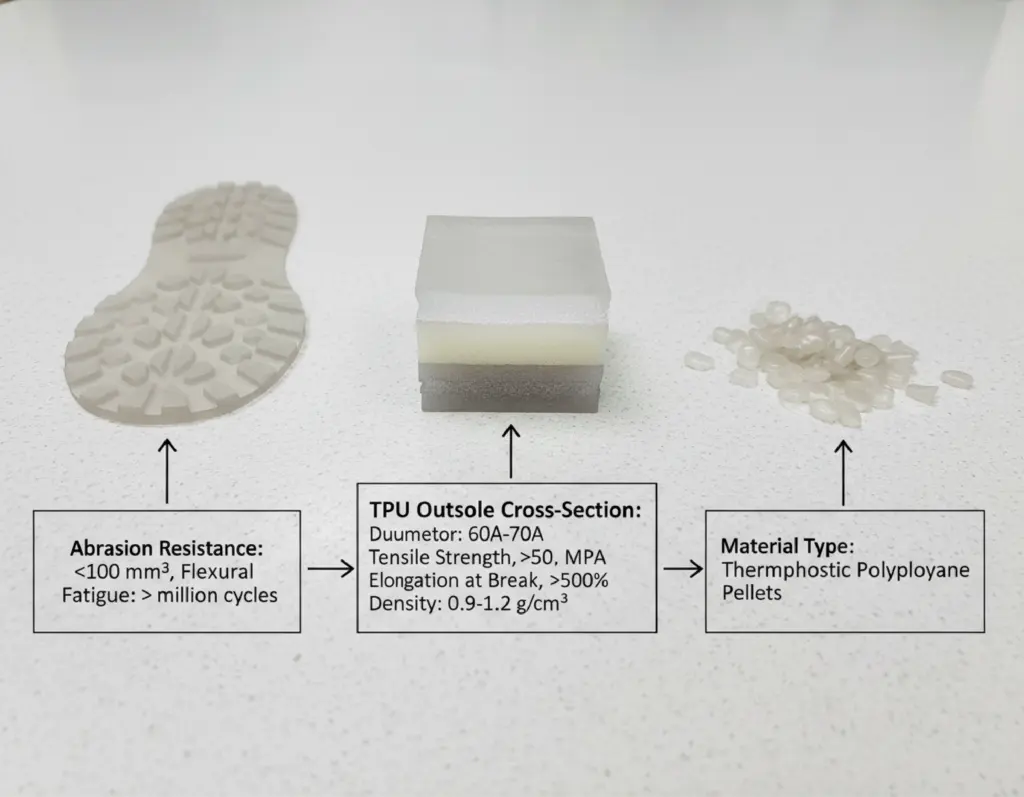
The invisible components often dictate the return rate. Lining selection—ranging from moisture-wicking calfskin to antimicrobial textiles—is critical for the microclimate of the shoe. Simultaneously, we analyze outsole density (measured in Shore A hardness) to balance abrasion resistance with lightweight flexibility.
From Material Sourcing to Footwear Development: The Sample Phase
The transition from a raw material to a physical prototype is where many brands falter. How Material Selection Impacts Cost, MOQ, and Production is a calculation that must happen early. For instance, exotic leathers may require higher MOQs due to hide yield, whereas specialized synthetics might offer more flexibility.
Sample Development Services
Our Sample Development Services utilize a "Rapid Prototyping" workflow. Once the materials are locked, we move into pattern making and 3D modeling. This stage includes:
Sampling Revisions:
Fine-tuning the last (the shoe form) to match the material's stretch coefficient.
Wear Testing:
Real-world stress tests to validate the bond between the upper and the outsole.
Scaling with a Custom Shoe Manufacturer: Design-to-Delivery
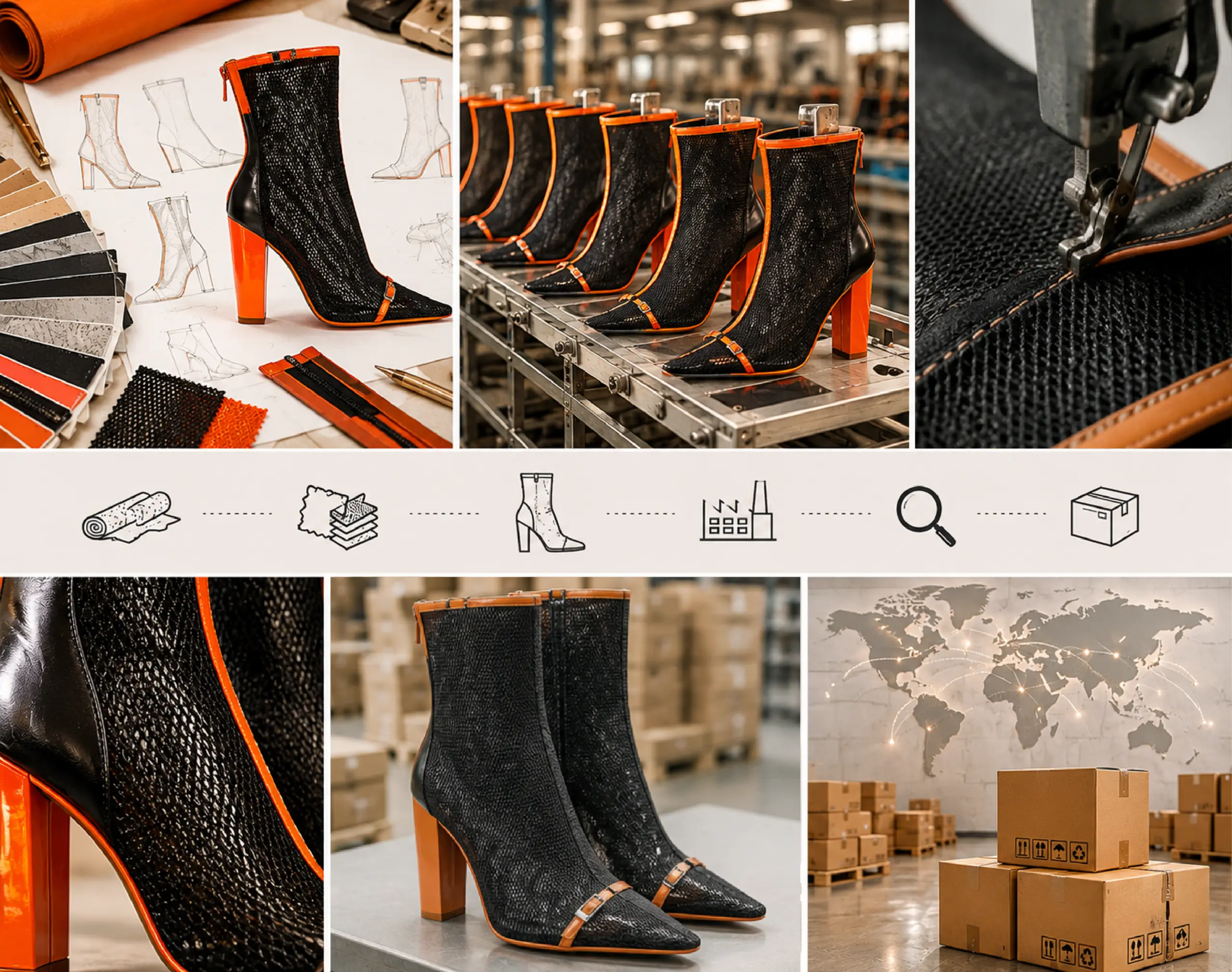
After the prototype is perfected, the focus shifts to scalable execution. Working with a Custom Shoe Manufacturer who understands your specific material constraints is vital.
Specialist Production Lines
Whether you require a Custom Women's Loafer Manufacturer for artisanal hand-sewn details or a Custom Men's Loafer Manufacturer for Goodyear-welted construction, our platform connects you to specialized production lines. As an established OEM Shoe Manufacturer, we provide a Design-to-Delivery Manufacturing solution that handles everything from bulk material procurement to final quality control.
The Value of Italian Craftsmanship & Flexible MOQ
While we honor the heritage of Italian craftsmanship—focusing on precision and hand-finishing—we recognize the needs of modern business. Our MOQ-friendly flexible production models allow emerging brands to launch with 100-300 pairs per style, preventing overstock and allowing for market testing.
Building a Scalable Footwear Supply Chain
Common Material Sourcing Mistakes New Footwear Brands Make often include ignoring lead times for specialized materials or failing to account for "yield loss" during cutting. To avoid these, brands must view their footwear material supplier as a strategic partner rather than a mere vendor.
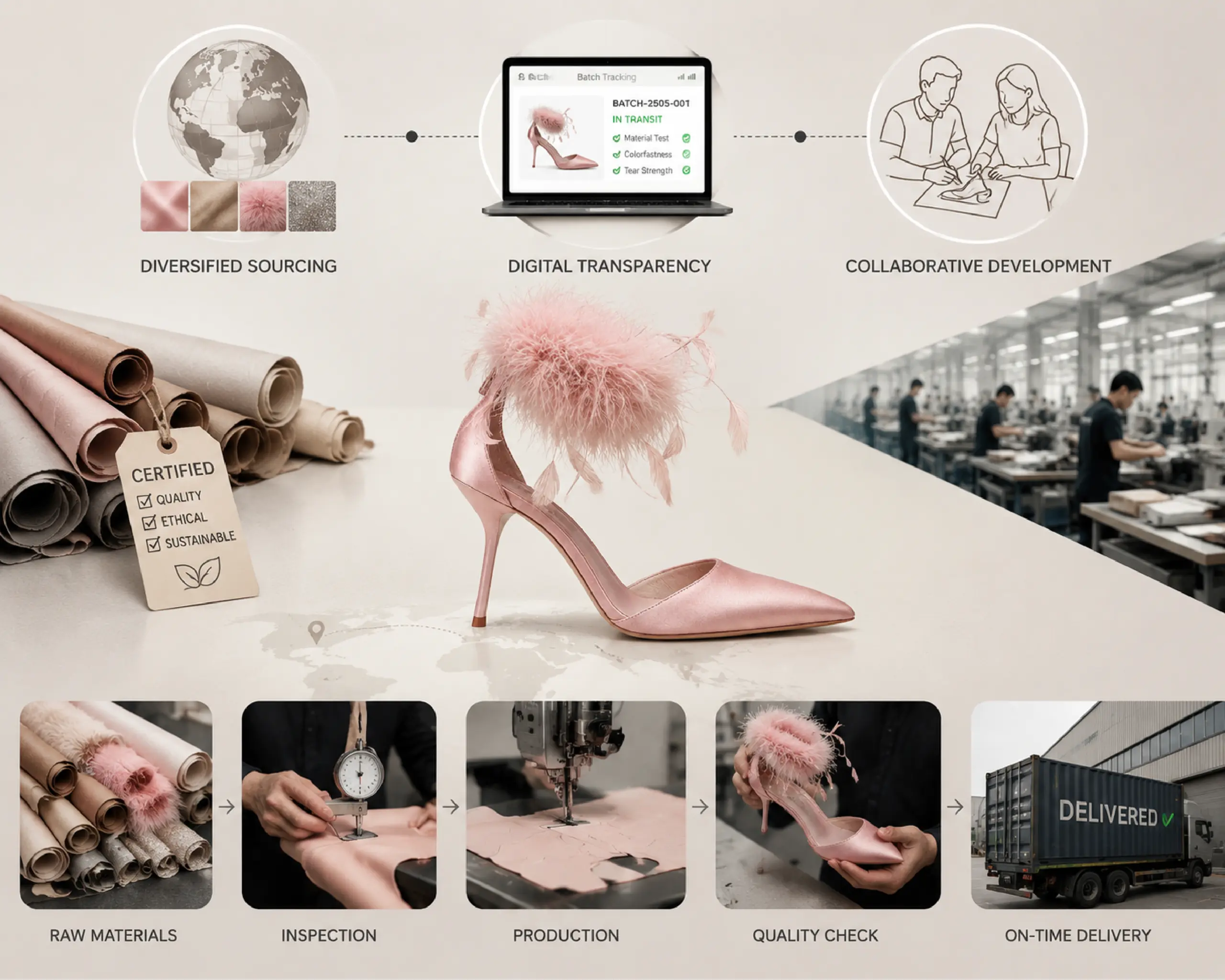
Building a Scalable Footwear Supply Chain requires a balance of:
Material Diversification:
1. Not relying on a single source for critical components.
Digital Transparency:
2. Real-time tracking of material batches and testing reports.
Collaborative Development:
3. Involving the manufacturer in the material selection process to optimize for production efficiency.
Your Development Resource Hub
At Material Station, we don’t just supply components; we architect success. By bridging the gap between raw innovation and master craftsmanship, we help fashion visionaries build products that are as durable as they are beautiful.
Ready to elevate your next collection?
FAQ Section
Q1: How do you ensure the durability of recycled footwear materials?
We conduct standardized tensile and abrasion tests on all recycled materials before they are approved for the sampling phase, ensuring they meet the high-performance benchmarks of traditional materials.
Q2: Can I source materials through your platform if I already have a manufacturer?
Yes, absolutely. Even if you already have your own factory or production partners, we welcome the opportunity to explore potential collaborations. XINZIRAIN specializes in OEM, ODM, and private label manufacturing services for footwear and bags, offering comprehensive support ranging from sample development and mass production to quality control and brand customization.
Please note that we do not provide standalone material sourcing services; our supply chain resources are utilized exclusively to support the development and production of finished footwear and bag products.
Q3: What are the typical lead times for sample development?
Once the appropriate footwear materials have been selected and the design specifications finalized, our sample development service typically delivers a physical prototype within 20 to 30 business days.
Q4: How does material selection impact the MOQ?
Stock materials usually allow for lower MOQs. However, custom-dyed leathers or bespoke outsoles may require higher minimums. We work to negotiate the best terms to remain MOQ-friendly.
Q5: Are your materials compliant with international export standards?
Absolutely. All our materials are vetted for REACH and CPSIA compliance, and we provide LWG certifications for our leather sourcing.